A fake message, website, social-media account, or support representative can look convincing enough to make users believe they are communicating with Kraken. The safest approach is to slow down, verify every request independently, and avoid sharing credentials or security codes through unexpected channels.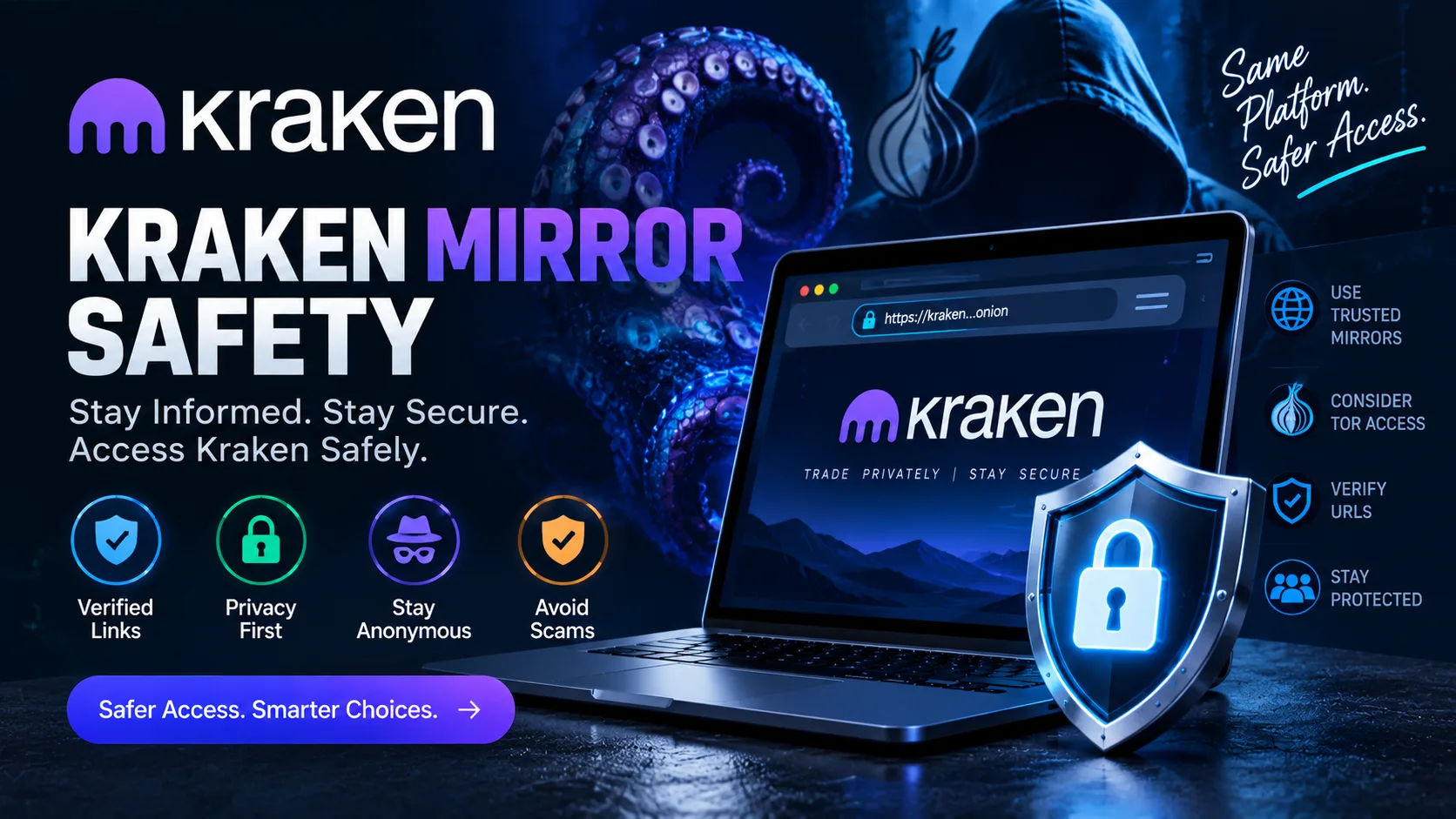
Understanding Kraken impersonation safety is especially important because attackers often rely on urgency, trust, and realistic branding rather than obvious technical tricks. The Russian phrase имитация Kraken refers to Kraken imitation or impersonation, which can include fake websites, fake support accounts, copied branding, and misleading messages.
Kraken Impersonation
Kraken impersonation happens when someone pretends to represent Kraken or creates something designed to look like an authentic Kraken service. The goal may be to obtain login credentials, authentication codes, personal information, cryptocurrency, or access to an account.
Impersonation does not always look like a poorly written scam. Modern fraudulent messages can contain professional graphics, familiar logos, convincing language, and references to legitimate cryptocurrency services.
This is why visual appearance alone should never be treated as proof of authenticity.
A useful Kraken impersonation safety имитация Kraken habit is to treat unexpected communication as unverified until you independently confirm it.
Common Forms of Impersonation
Impersonation can appear in several forms.
A fake website may copy the appearance of a legitimate cryptocurrency exchange. A fraudulent email may claim that an account has been restricted. A social-media profile may use a company logo and similar username.
Attackers can also impersonate customer-support representatives. They may contact users after seeing a public complaint or question and offer to "solve" an account problem.
Another method involves fake advertisements or search results. A user searching for a login page may encounter a fraudulent result designed to redirect them to a cloned website.
These different methods are examples of имитация Kraken, because they attempt to imitate the identity or appearance of the real company.
Verify the Website Before Logging In
One of the most important ways to improve Kraken impersonation safety is to verify the website before entering any sensitive information.
Do not assume that a page is legitimate because it contains the Kraken logo or looks professionally designed.
Check the browser's address bar carefully. Look for the correct official domain and be suspicious of domains containing extra words, unusual spelling, additional hyphens, or misleading subdomains.
A fraudulent website might use a domain that looks similar at first glance. The difference may be only a few characters.
Avoid Login Links From Unexpected Messages
If an email or message tells you to "verify your account immediately," avoid clicking its login button.
Instead, open your browser independently and navigate to the official Kraken website using a trusted bookmark or manually entered address.
This simple habit removes one major opportunity for an attacker to redirect you.
The same principle applies to messages claiming that your account needs urgent verification, that a transaction is pending, or that security action is required.
Urgency should encourage verification, not immediate action.
Examine the Full Domain
On a desktop computer, look carefully at the complete address rather than only the website design.
Attackers sometimes place a legitimate-looking word somewhere in a long address to make the page appear authentic.
For example, a suspicious address might contain "Kraken" while the actual registered domain belongs to an unrelated organization.
Learning to recognize this technique is an important part of имитация Kraken awareness.
Be Careful With Emails and Messages
Email remains one of the most common ways scammers establish initial contact.
A message may claim that suspicious activity has been detected, a withdrawal needs confirmation, or an account will be suspended.
Instead of reacting immediately, consider whether you expected the communication.
Look at the sender information carefully. A display name can be misleading, so the visible name alone is not enough.
Do not open unexpected attachments or follow unfamiliar links merely because the message appears to use official branding.
Watch for Pressure and Threats
Pressure is one of the strongest warning signs.
A fraudulent representative might tell you that you have only a few minutes to respond. They may threaten account closure or claim that your funds will disappear unless you follow their instructions.
Legitimate security procedures should not require you to surrender control of your account simply because someone creates urgency.
A strong Kraken impersonation safety routine is to stop whenever a message tries to rush you.
Take time to verify the claim through an independently opened official channel.
Never Share Sensitive Security Information
Users should be extremely careful with passwords, authentication codes, recovery information, and other security credentials.
A person claiming to be support may ask for information "to verify ownership." That request should be treated with suspicion.
Never assume that someone is legitimate simply because they know your name, email address, or partial account information.
Attackers may obtain basic information from public profiles, previous data breaches, leaked databases, or social-media activity.
Authentication Codes Are Sensitive
One-time authentication codes should be treated as confidential.
If someone asks you to read a code to them, consider why they need it. An attacker may be attempting to use the code during a login or account-recovery process.
The same warning applies to screenshots containing security information.
Good Kraken impersonation safety means keeping authentication details private even when the person requesting them claims to be an employee.
Be Wary of Fake Customer Support
Customer-support impersonation deserves particular attention because users may already be stressed when they seek help.
For example, someone may post publicly about a missing transaction. A fake support account could respond and offer assistance.
The scammer might then direct the user to a private conversation and request login information, authentication codes, or cryptocurrency.
This is a classic example of имитация Kraken.
Verify Support Independently
If someone contacts you claiming to be Kraken support, do not rely on the contact information they provide.
Instead, locate the official support page independently through the legitimate Kraken website.
Start a support request using the company's own published process.
If the original person was genuine, independent verification should still protect you. If the person was fraudulent, you have avoided continuing the conversation through an attacker-controlled channel.
Be Careful on Social Media
Social-media impersonation can be particularly convincing because users are accustomed to interacting with brands through public platforms.
A fraudulent account may copy a company logo, profile description, and even posts from the genuine account.
It may also have a username that differs from the authentic account by only a few characters.
Do not assume that a verified-looking profile or large follower count automatically proves legitimacy.
Attackers can create sophisticated profiles, purchase advertising, or manipulate engagement.
Do Not Send Funds to "Support"
One of the clearest warning signs is a request to transfer cryptocurrency as part of a supposed support procedure.
A person might claim that you must send funds to "unlock" an account, verify a wallet, recover a transaction, or activate a security feature.
Treat such requests as highly suspicious.
The safest Kraken impersonation safety principle is to independently verify any financial instruction before acting.
Recognize Fake Giveaways and Promotions
Impersonators may use fake promotions to attract attention.
A fraudulent post might claim that Kraken is giving away cryptocurrency and that users must first send a smaller amount to qualify.
This type of promise should receive careful scrutiny.
The presence of a familiar logo does not make a promotion genuine.
If a promotion sounds unusually generous or requires cryptocurrency to be sent first, stop and verify it using an independently accessed official source.
These schemes are another form of имитация Kraken, because the attacker uses a company's identity to make a fraudulent offer appear trustworthy.
Use Strong Account Security
Avoiding impersonation is only one part of account protection.
Users should also maintain strong account-security practices. Use a unique password rather than reusing the same password across multiple services.
Where supported, use strong authentication protections and keep recovery information secure.
A password manager can help generate and store unique passwords without requiring users to memorize every credential.
These practices reduce the consequences if an attacker successfully obtains a password somewhere else.
Keep Devices Updated
Security updates can address vulnerabilities that attackers may exploit.
Keep your operating system, browser, security software, and important applications updated.
Do not install unfamiliar browser extensions or applications simply because a person claiming to be support tells you to do so.
An attacker could use remote-access software or malicious applications to obtain information from your device.
Check Before Approving Transactions
Impersonation scams can eventually lead to financial theft.
Before approving a withdrawal or cryptocurrency transfer, review the destination, amount, and purpose carefully.
If someone unexpectedly instructs you to move assets to a "secure wallet," stop and independently verify the request.
Do not assume that a transaction is safe because the instruction came through a familiar-looking interface.
A cautious approach to Kraken impersonation safety involves treating every unexpected financial instruction as something that requires independent confirmation.
What to Do If You Encounter a Suspicious Account
If you encounter a suspicious website, message, email, or social-media account, avoid interacting further.
Do not argue with the suspected scammer. Do not provide additional information to test whether they are genuine.
Save relevant evidence when appropriate, such as the message, sender information, suspicious website address, or social-media username.
Then use the legitimate company's official reporting or support process to report the incident.
If You Already Shared Information
If you have already entered your credentials into a suspicious website, take the situation seriously.
Stop interacting with the suspicious website and access your legitimate account through an independently verified official channel.
Change compromised credentials as appropriate and review account activity for anything unusual.
If you shared authentication information, take additional security steps immediately.
If cryptocurrency or financial information may have been exposed, document what happened and contact the relevant legitimate support or financial institution through independently verified contact information.
Quick action can reduce the potential impact.
Build a Verification Routine
The best defense is not memorizing every possible scam.
Instead, develop a simple routine that works whenever something unexpected happens.
First, stop.
Second, identify what the message is asking you to do.
Third, avoid using the links or contact information provided by the message.
Fourth, independently access the official service.
Fifth, verify the request through a trusted channel.
This routine makes Kraken impersonation safety easier because you do not have to determine whether a message "looks real" before protecting yourself.
Ask Yourself Five Questions
Before responding to a suspicious communication, ask:
- Did I expect this message?
- Is the website address genuinely associated with the official service?
- Is someone pressuring me to act quickly?
- Are they requesting confidential information?
- Are they asking me to send cryptocurrency or install software?
Several warning signs together should be treated as a strong reason to stop and verify independently.
Why Impersonation Scams Work
Understanding the psychology behind impersonation can make users more resistant to it.
Scammers frequently exploit authority, urgency, fear, and trust.
A message that says "security team" may create authority. A warning about account suspension creates fear. A limited response window creates urgency.
These emotional triggers can cause people to act before they have checked the facts.
Recognizing this technique helps users create a pause between receiving a message and taking action.
That pause is an important element of имитация Kraken awareness and general online security.
Keep Personal Information Limited
Avoid publicly sharing unnecessary information about cryptocurrency accounts, transactions, recovery processes, or security procedures.
The more information an attacker can collect, the easier it may become to construct a convincing impersonation attempt.
Public posts can provide clues about which services you use and when you may be experiencing a problem.
Attackers can combine these clues with information from other sources.
Limiting unnecessary exposure makes targeted impersonation more difficult.
Avoid Trusting Screenshots as Proof
Screenshots can be manipulated easily.
A screenshot showing a supposed conversation with support, a payment confirmation, or an account notification does not independently prove that the information is authentic.
Similarly, a copied company logo is not evidence of legitimacy.
Verify important information directly through the official service.
This is especially important when money, credentials, or account access are involved.
How Families and Teams Can Improve Safety
Impersonation awareness should not be limited to individual users.
If cryptocurrency accounts are managed by a team, establish clear procedures for financial and security requests.
For example, important account changes or transfers can require independent verification rather than relying on a message from one person.
Family members can use the same principle.
If someone receives a suspicious request, they can pause and consult another trusted person before taking action.
A shared verification habit can prevent one convincing message from becoming a serious security incident.
Conclusion
Avoiding Kraken impersonation requires a combination of awareness, verification, and patience. Users should not rely on logos, professional design, display names, screenshots, or confident language as proof that a communication is authentic.
Instead, independently verify websites and support channels, avoid unexpected login links, protect passwords and authentication codes, and treat urgent financial requests with particular caution.
The concept of Kraken impersonation safety is ultimately about controlling the verification process yourself. When a message tells you where to click, whom to contact, or where to send money, do not automatically follow its instructions. Open the legitimate service independently and verify the information there.
The term имитация Kraken is useful to remember because impersonation can take many forms. It may appear as a fake website, social-media account, support representative, email, advertisement, giveaway, or other communication designed to resemble a legitimate Kraken interaction.
If something feels unusual, stopping is often safer than trying to prove that it is genuine while remaining inside the suspicious interaction.
A strong security routine is simple: pause, inspect, independently verify, and protect confidential information. Users who consistently follow those steps can significantly reduce their exposure to impersonation attempts and make it much harder for fraudulent actors to turn trust into unauthorized account access or financial loss.